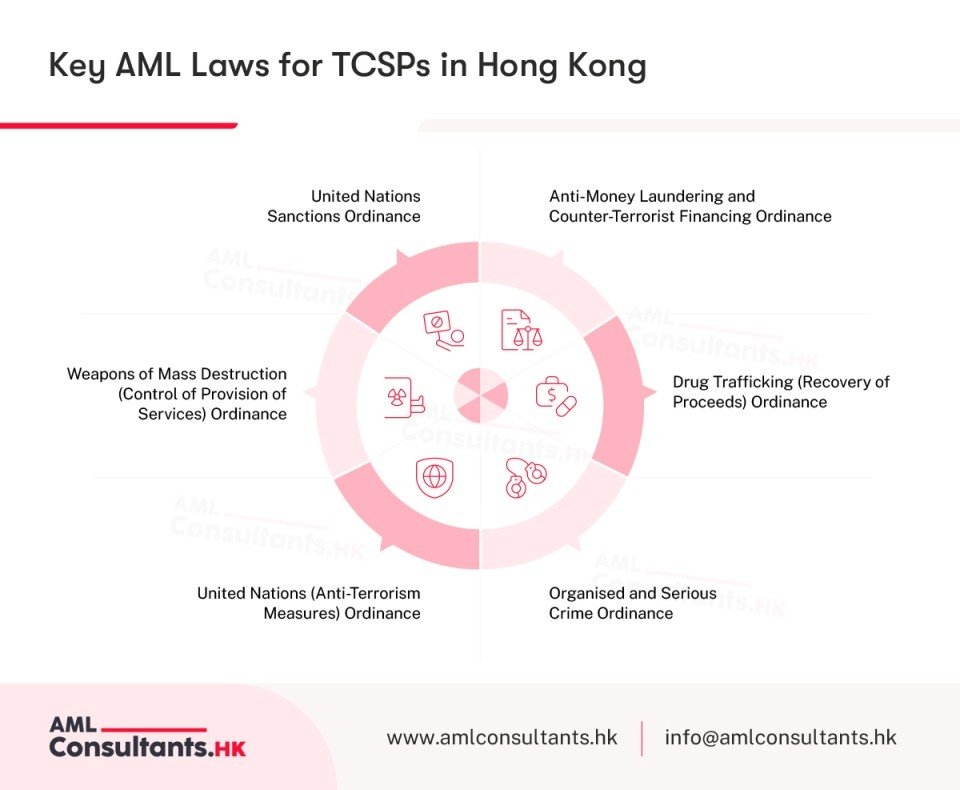
AML Laws for Legal Professionals in Hong Kong: Summary Box
1. The AML Laws for Legal professionals in Hong Kong apply to lawyers, solicitors, and law firms involved in specified financial and transactional services.
2. The legal sector AML guideline sets expectations for customer due diligence, record-keeping, suspicious transaction reporting, and internal controls.
3. Firms must implement CDD, including identity verification, beneficial ownership verification, and risk assessment, before establishing business relationships.
4. Legal professionals must identify high-risk situations such as third-party payments, complex ownership structures, and relationships involving PEPs.
5. Regulatory oversight and enforcement ensure that the legal sector remains aligned with the AML Laws for Legal Professionals in Hong Kong, as well as with international standards.
6. Evidence of compliance includes documented CDD procedures, transaction monitoring practices, staff training, and internal AML policies maintained by law firms.
Talk to a Hong Kong AML specialist
Scope and applicability
– The AML Laws for Legal Professionals in Hong Kong apply to solicitors and lawyers engaged in certain financial or transactional activities on behalf of clients. AML/CFT obligations apply in particular when legal professionals prepare for or carry out specified transactions, including: (i) buying or selling real estate; (ii) managing client money, securities or other assets; (iii) managing bank, savings or securities accounts; (iv) forming or managing companies or legal arrangements; and (v) buying or selling business entities.
– Under this framework, legal professionals must perform CDD before establishing business relationships or carrying out the specified transactions listed above. The objective is to identify clients accurately and ensure the legal profession is not misused for money laundering and terrorist financing.
– Beneficial ownership verification is also a key requirement for legal professionals under Hong Kong’s AML regime, particularly where clients have complex corporate structures. Lawyers must understand who ultimately controls or benefits from legal arrangements.
– The sector must also follow the relevant legal sector’s AML Guidelines, which outline practical measures for identifying risk indicators such as third-party payments and unusual instructions involving offshore entities.
AML/CFT Laws and Regulations for Legal Professionals in HK
Legal professionals in Hong Kong must comply with statutory AML/CFT obligations, sector guidance, and professional conduct requirements where applicable.
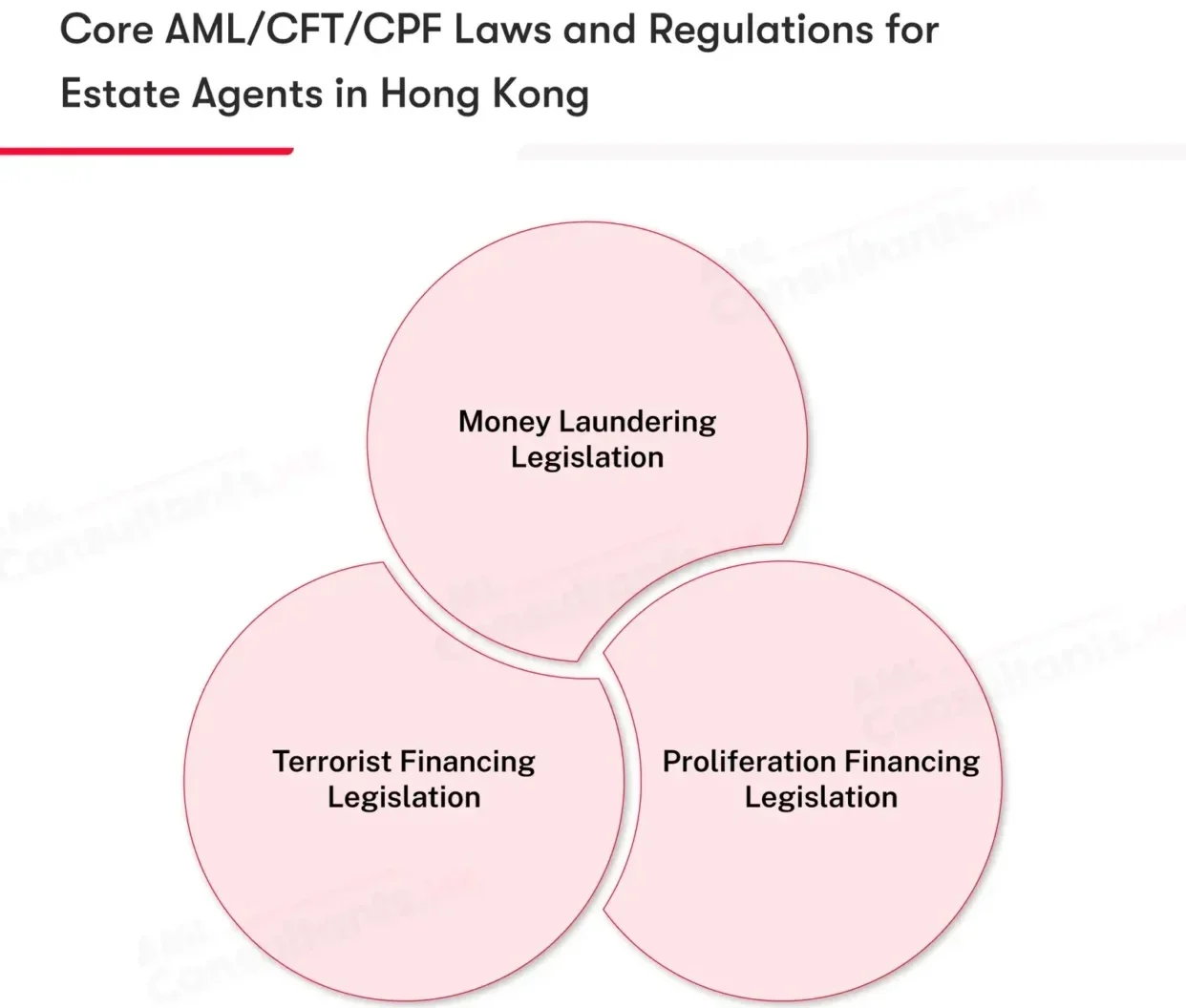
Money Laundering Legislation
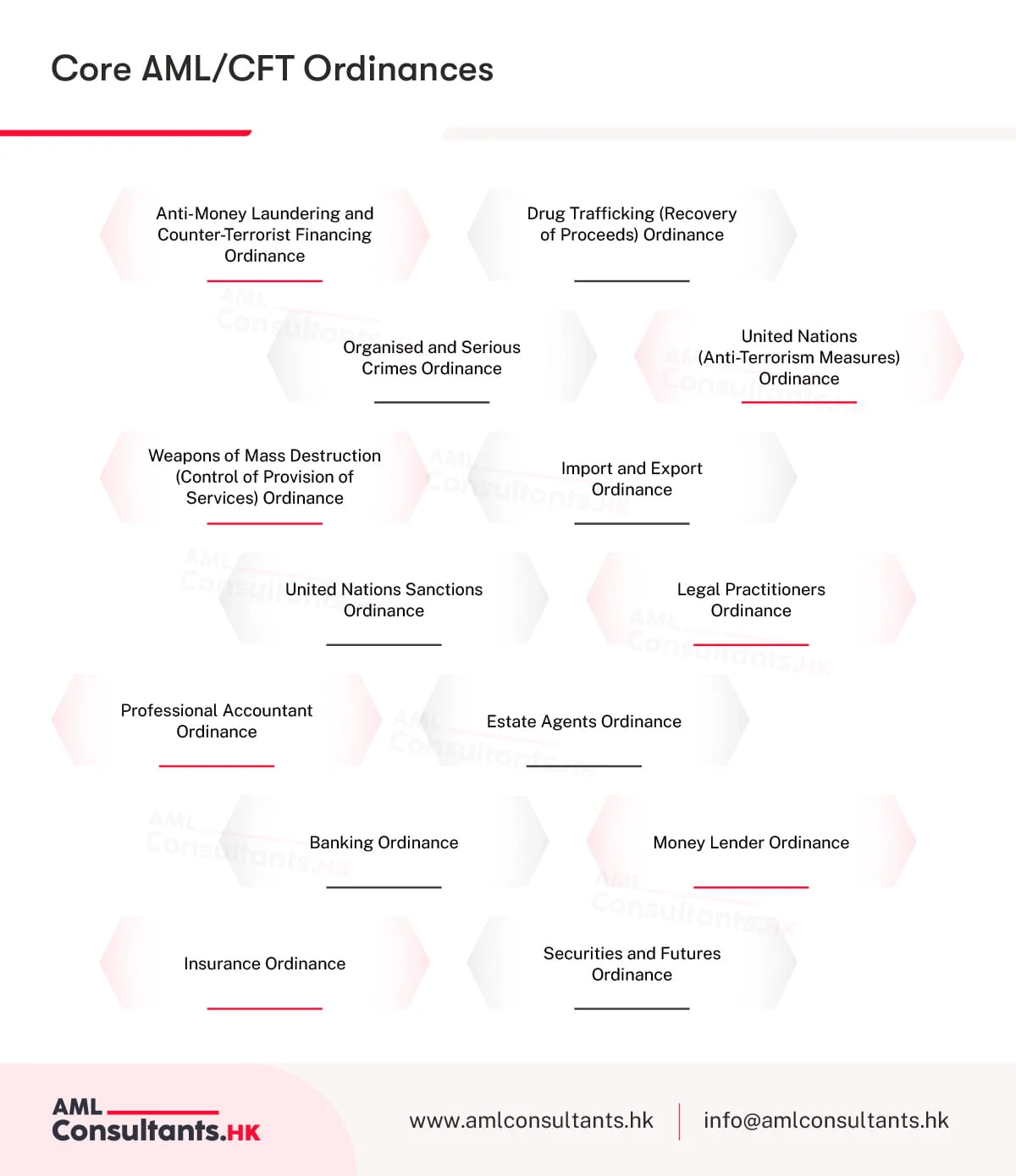
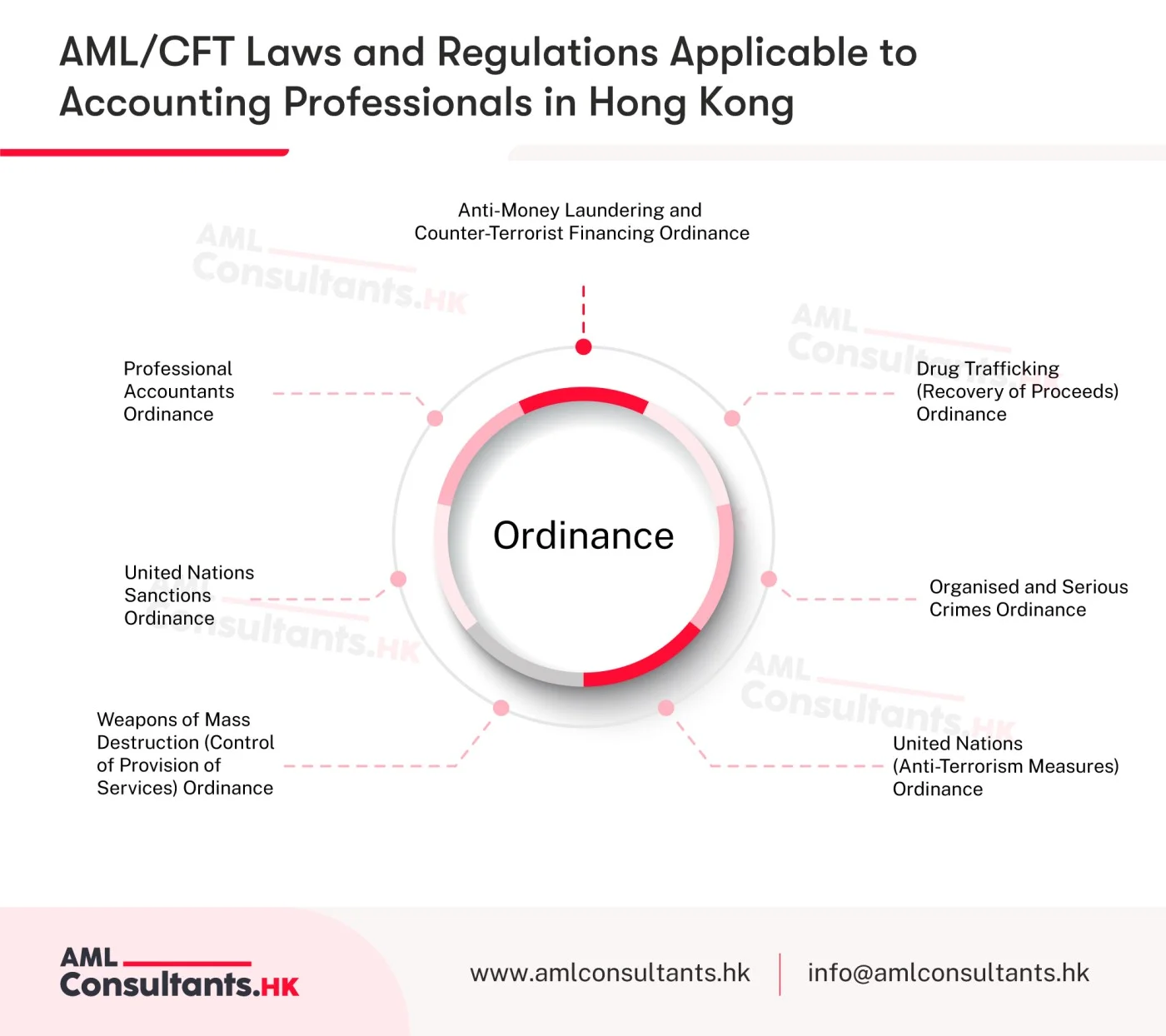
- The primary legislation supporting the AML Laws for Legal Professionals in Hong Kong is the Anti-Money Laundering and Counter-Terrorist Financing Ordinance (AMLO), which mandates legal professionals to conduct Customer Due Diligence (CDD) and comply with record-keeping requirements across regulated professions.
- The Drug Trafficking (Recovery of Proceeds) Ordinance (DTRPO) Cap. 405 applies to legal professionals in Hong Kong primarily as a mandatory reporting obligation when they know or suspect that property represents the proceeds of drug trafficking. Under AML Laws for Legal Professionals in Hong Kong, legal professionals act as “gatekeepers” and are required to disclose any knowledge or suspicion to the JFIU by filing an STR.
- Organized and Serious Crimes Ordinance (OSCO) 455 applies to legal professionals in Hong Kong by imposing mandatory AML/CFT obligations, including the duty to report STRs and prohibitions against “tipping off” clients. Under section 25 of OSCO, it is a criminal offence for any person to deal with property knowingly or having reasonable grounds to believe that it represents the proceeds of an indictable offence.
Terrorist Financing Legislation
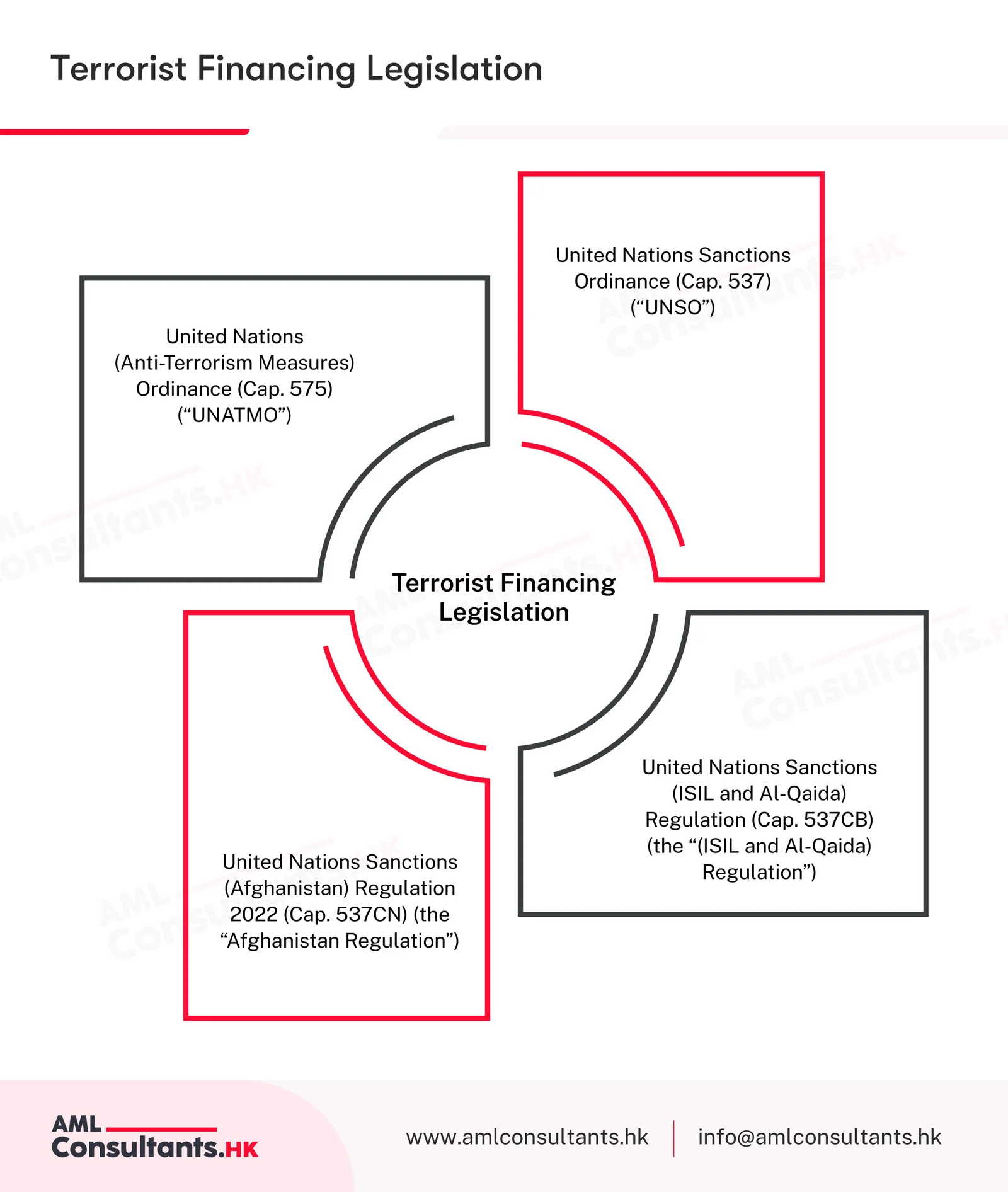
- The United Nations (Anti-Terrorism Measures) Ordinance (UNATMO) Cap. 575 is the principal legislation criminalising terrorist financing in Hong Kong. It implements UN Security Council Resolution 1373 and creates standalone offences for providing or collecting property with the intention or knowledge that it will be used to commit terrorist acts (section 7), as well as for dealing with terrorist property or making property or financial services available to terrorists or terrorist associates. UNATMO also empowers authorities to freeze and seize terrorist property.
- United Nations Sanctions Ordinance (UNSO) Cap. 537 implements sanctions imposed by the UNSC in Hong Kong. Under the UNSO, subsidiary regulations such as the ISIL and Al-Qaida Regulation and the Afghanistan Regulation give effect to targeted financial sanctions, asset freezes, and travel bans directed at designated terrorists and terrorist entities. Legal professionals must ensure compliance with these sanctions as a statutory obligation.
- The United Nations Sanctions (ISIL and Al-Qaida) Regulation (Cap. 537CB) (the “(ISIL and Al-Qaida) Regulation”) prohibits the supply or transfer of arms, military-related assistance, and funds or economic assets to ISIL and Al-Qaida designated persons and entities. Legal professionals in Hong Kong must screen clients against the published sanctions list and ensure they do not facilitate dealings benefiting designated individuals or entities.
- The United Nations Sanctions (Afghanistan) Regulation 2022 (Cap. 537CN) (the “Afghanistan Regulation”) implements UNSC sanctions on Afghanistan by prohibiting arms supply, imposing targeted financial sanctions, and restricting economic assets to designated persons and entities. Legal professionals must ensure that no funds, property, or legal services under their control are made available to sanctioned individuals or entities.
Proliferation Financing Legislation
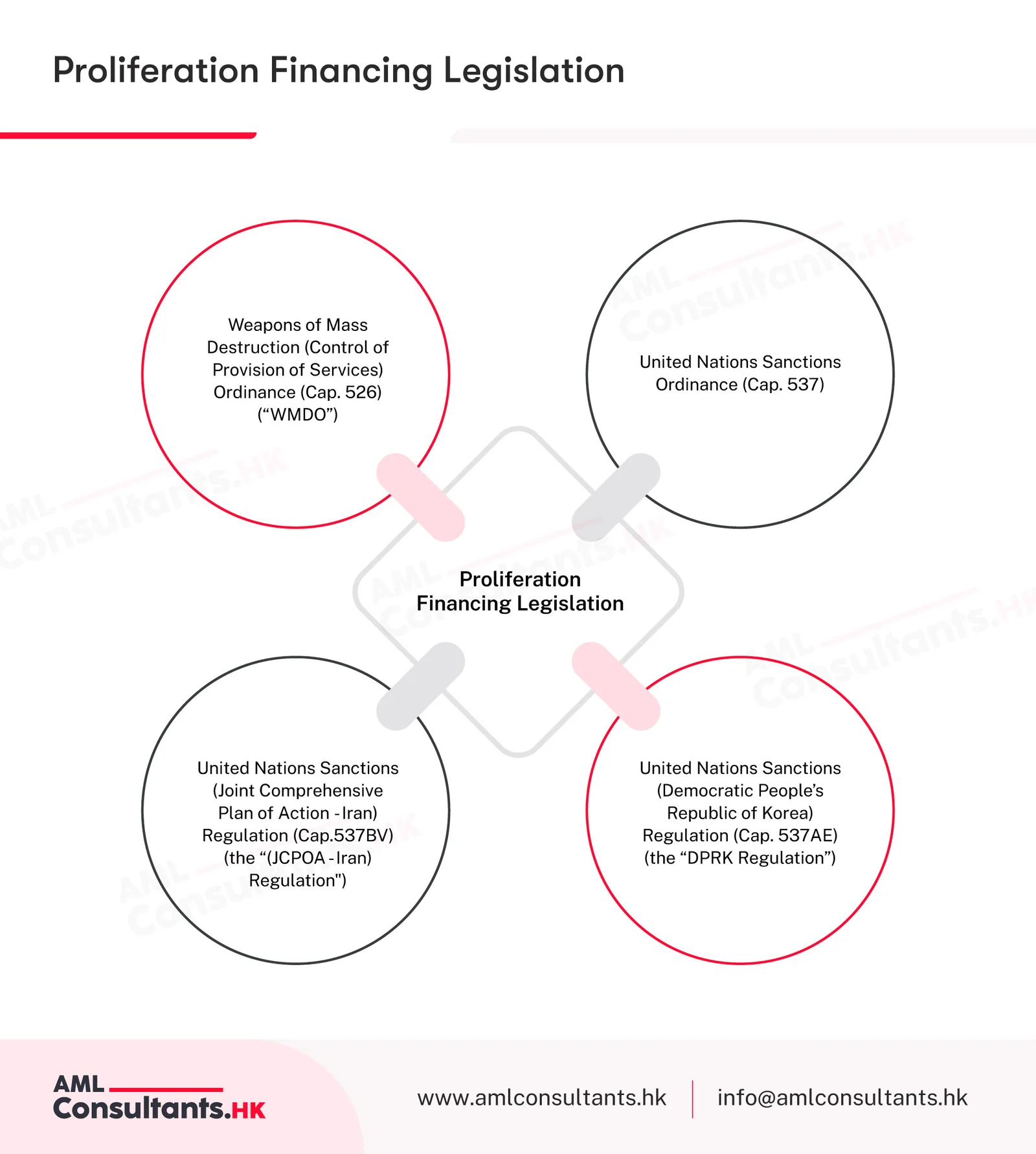
- The Weapons of Mass Destruction (Control of Provision of Services) Ordinance (WMDO) Cap. 526 prohibits any person from providing services that will or may assist the development, production, acquisition, or stockpiling of weapons of mass destruction. “Services” is broadly defined to include financing, sourcing of materials, training, technological information, and consulting. Legal professionals must ensure their advisory and transactional work does not assist any prohibited activity under the WMDO.
- United Nations Sanctions Ordinance (UNSO) Cap. 537 is the parent ordinance empowering the Chief Executive to make regulations implementing UNSC sanctions in Hong Kong. In the proliferation financing context, the UNSO underpins subsidiary regulations such as the JCPOA-Iran Regulation and the DPRK Regulation, which impose restrictions on arms transfers, nuclear and ballistic missile-related items, and the financial assets of designated persons. Legal professionals must comply with these sanctions as a statutory obligation.
- The United Nations Sanctions (Joint Comprehensive Plan of Action – Iran) Regulation (Cap.537BV) (the “(JCPOA – Iran) Regulation”) implements UNSC Resolution 2231 by prohibiting the transfer of conventional arms, nuclear-related items, and ballistic missile-related items to or from Iran, and restricting economic assets of designated persons. Legal professionals must not facilitate transactions or services benefiting designated individuals or entities.
- The United Nations Sanctions (Democratic People’s Republic of Korea) Regulation (Cap. 537AE) (the “DPRK Regulation”) implements UNSC sanctions on the DPRK by prohibiting arms supply, restricting proliferation-related financial transactions, and freezing economic assets of designated persons and entities. Legal professionals must screen clients against the sanctions list and ensure no funds, property, or legal services under their control reach sanctioned individuals or entities.
Other Legislation
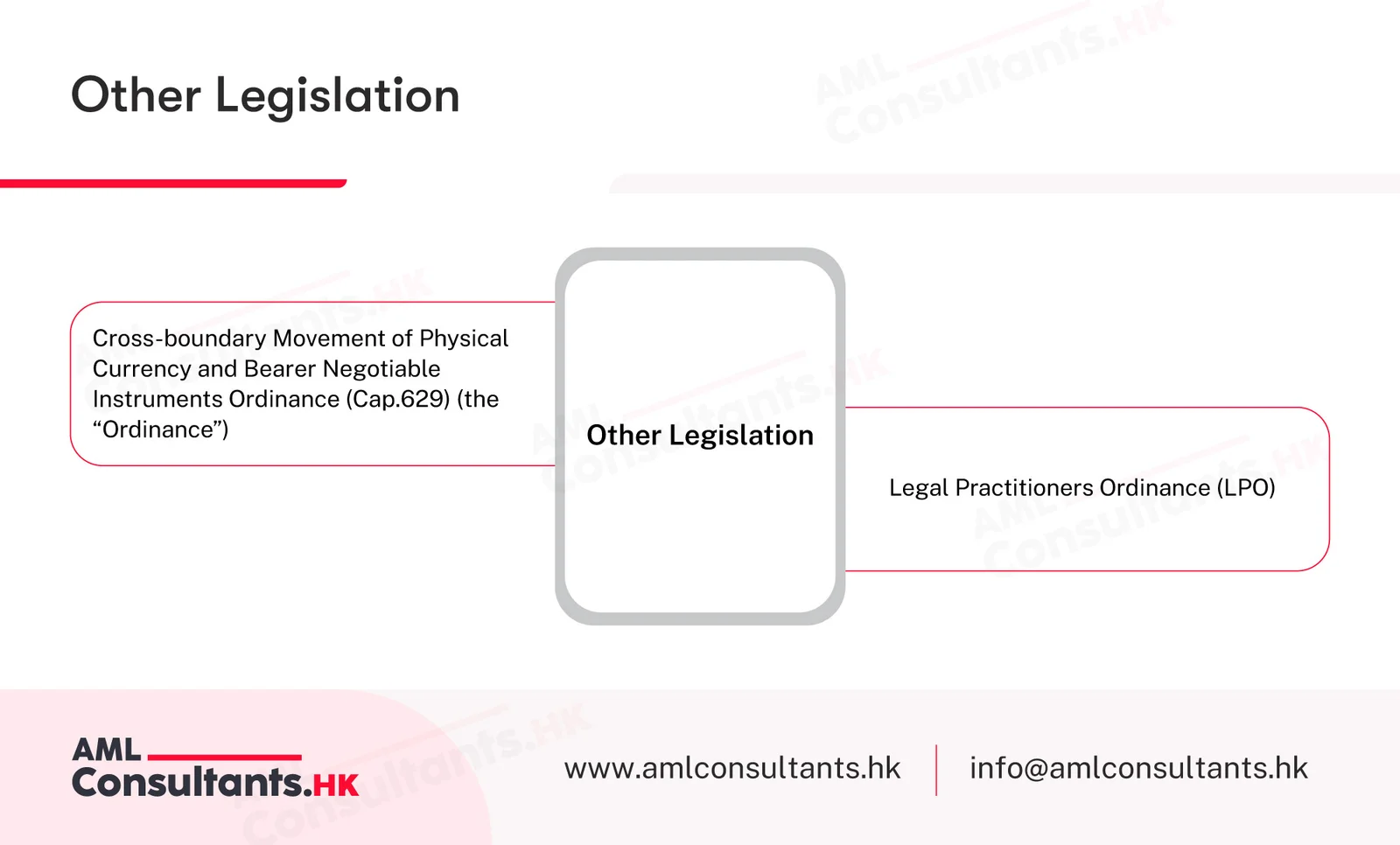
- The Cross-boundary Movement of Physical Currency and Bearer Negotiable Instruments Ordinance (Cap. 629) (the “Ordinance”) establishes a declaration and disclosure system to detect the cross-boundary transportation of large quantities of currency and bearer negotiable instruments (CBNIs) into and out of Hong Kong for AML/CFT purposes. Legal professionals must be aware that persons carrying CBNIs with a total value exceeding HK$120,000 (or the equivalent in foreign currencies) are required to declare them to Customs, and any failure to declare or false declaration may indicate ML/TF activity warranting a suspicious transaction report.
- Additionally, the Legal Practitioners Ordinance (LPO) Cap. 159 regulates the legal profession in Hong Kong and establishes the qualification and admission requirements for solicitors and barristers to practise law. It imposes obligations on lawyers to hold practising certificates and confers regulatory powers on the Law Society and the Hong Kong Bar Association.
Strengthen Your Legal Professional AML Compliance
Ensure your firm meets Hong Kong’s AML/CFT regulatory expectations.
AML/CFT Guidelines Applicable to Legal Professionals in Hong Kong
Practice Direction P – Guidelines on Anti-Money Laundering and Terrorist Financing is the guideline applicable to legal professionals in Hong Kong.
The operational framework for legal professionals under Hong Kong’s AML regime is largely shaped by guidance issued by The Law Society of Hong Kong. These documents explain the AML Laws for Legal Professionals in Hong Kong and how legal practitioners should implement these AML procedures in practice.
The guidance emphasises implementing a robust CDD, particularly where transactions involve real estate, trust accounts, or international corporate structures. Lawyers must document client identity checks and maintain supporting records, in accordance with the AML Laws for Legal Professionals in Hong Kong.
Another core element is beneficial ownership verification, which requires firms to analyse corporate ownership layers and identify the ultimate beneficial owners. This step is especially important when dealing with offshore entities or complex trusts.
The legal sector AML guideline also outlines Enhanced Due Diligence (EDD) for higher-risk situations, including transactions involving PEP clients or unusual third-party payments.
AML/CFT Circulars Applicable to Legal Professionals in Hong Kong
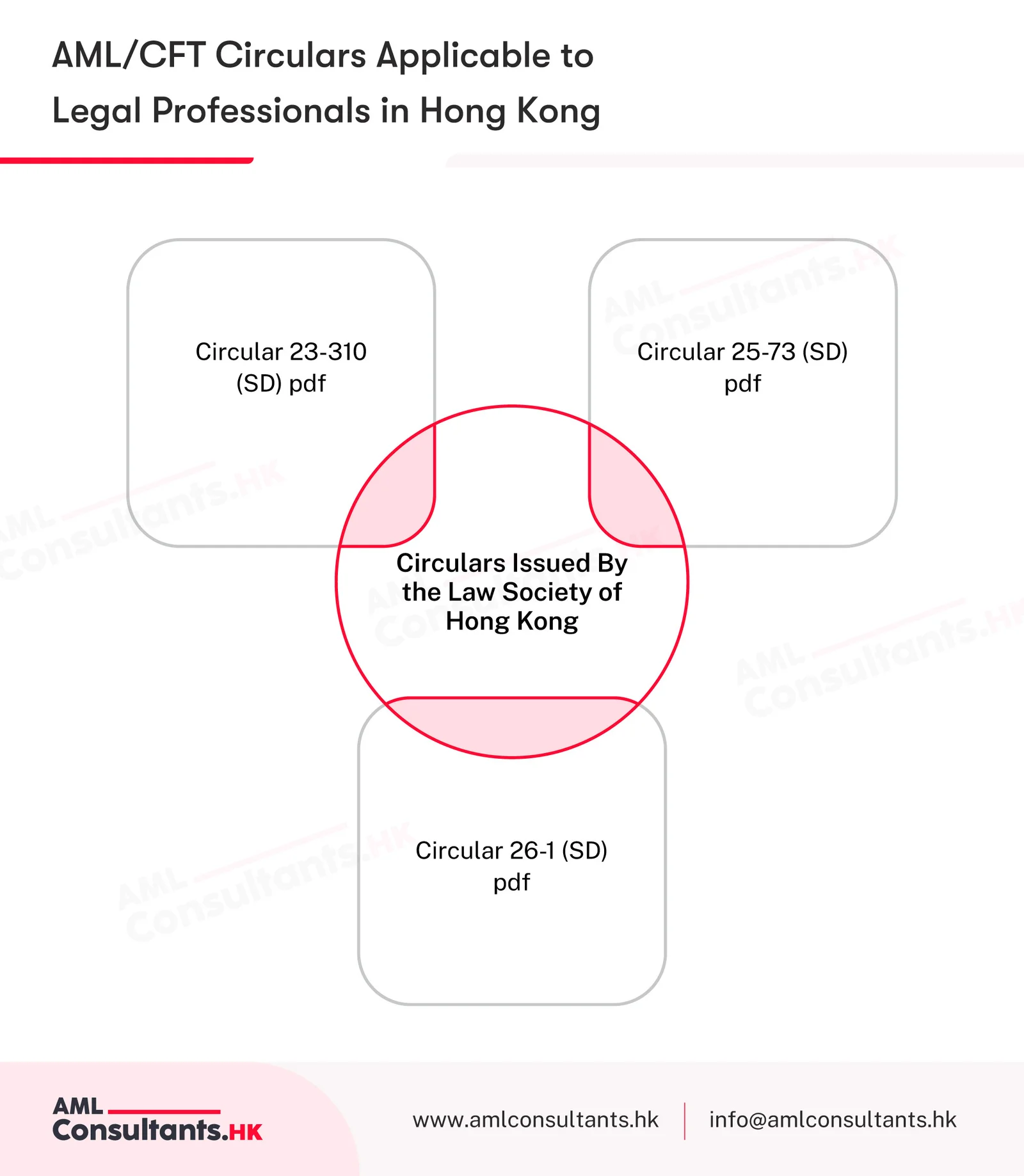
- Circular 23-310 (SD), issued by The Law Society of Hong Kong on 25 May 2023, accompanies the revised Practice Direction P (PDP) to align with the Anti-Money Laundering and Counter-Terrorist Financing (Amendment) Ordinance 2022. Key amendments include updated PEP definitions covering Non-Hong Kong and international organisation PEPs, recognition of iAM Smart as a digital identification system for client verification, new provisions on identifying and combating proliferation financing, and revised name screening requirements referencing sanctions and PF obligations. Legal professionals must review the revised PDP and ensure compliance with the updated CDD, EDD, and risk assessment requirements.
- Circular 25-73 (SD), issued by The Law Society of Hong Kong on 3 February 2025, formally supersedes nine outdated AML circulars issued between 2008 and 2018 that no longer reflect the current regulatory environment following subsequent amendments to Practice Direction P. It directs legal professionals to refer to the latest version of the PDP, effective from 1 June 2023, and to Circular 23-310 (SD) for the current AML/CTF requirements applicable to the legal profession in Hong Kong.
- Circular 26-1 (SD), issued by The Law Society of Hong Kong on 2 January 2026, launches the mandatory AML/CTF Compliance Self-Assessment Form for all law firms in Hong Kong. The form, which must be submitted online, requires firms to self-assess their compliance with CDD, record-keeping, and AML/CTF obligations for the period 1 January to 31 December 2025. Non-compliance may be treated as professional misconduct. The circular also outlines supporting training sessions and information sessions to assist firms with meeting their obligations.
AML/CFT Regulatory Authorities for Legal Professionals in Hong Kong
- The implementation of AML Laws for Legal Professionals in Hong Kong is supported by regulatory and supervisory bodies responsible for maintaining professional and regulatory standards within the legal sector.
- The primary body overseeing lawyers and solicitors is The Law Society of Hong Kong, which issues guidance and supervisory expectations for law firms to ensure compliance with the legal sector AML guidelines and broader regulatory requirements.
- Through inspections, professional guidance, and disciplinary mechanisms, the Law Society encourages law firms to maintain robust AML controls. This includes ensuring that firms implement effective law firm CDD procedures and maintain records supporting beneficial ownership verification.
- Regulatory Oversight ensures that the AML Laws for Legal Professionals in Hong Kong remain aligned with Hong Kong’s national AML/CFT strategy and contribute to the broader effort to prevent the misuse of professional services for financial crime.
Prepare for AML Regulatory Reviews
Ensure your law firm’s CDD and beneficial ownership verification procedures meet regulatory standards.
AML/CFT Law Enforcement Agencies in the Legal Sector
- Law Enforcement Agencies (LEAs) play a vital role in addressing financial crime risk associated with legal services.
- Regulatory authorities oversee professional compliance, while enforcement agencies investigate and prosecute suspected ML/TF offences.
- The following are the LEAs working to ensure the enforcement of the AML Laws for Legal Professionals in Hong Kong:
Financial Intelligence Unit in Hong Kong
– The Joint Financial Intelligence Unit (JFIU) is a joint unit operated by the Hong Kong Police Force (HKPF) and the Customs and Excise Department (C&ED).
– The JFIU manages Hong Kong’s suspicious transaction reporting regime by receiving, analysing, and disseminating STRs to appropriate law enforcement agencies in Hong Kong or overseas, and to financial intelligence units worldwide where relevant.
– Where investigations identify concealed ownership structures, law enforcement may scrutinise the adequacy of beneficial ownership verification.
Hong Kong NRA, SRA, and Risks Associated with Legal Professionals
– Hong Kong’s National Risk Assessment (NRA) .
– The Legal Professional Sector in Hong Kong is rated as Medium-Low Risk because of the following ML Threats and Vulnerabilities:
ML Threats in the Legal Professional Sector (medium to low)
– Legal professionals can be exposed to risks arising from lawyers’ involvement in financial transactions and corporate structuring.
– According to Hong Kong’s Money Laundering and Terrorist Financing Risk Assessment Report 2022, the legal sector is exposed to ML/TF risks through areas such as real estate transactions, client funds, corporate structuring, trusts, and cross-border client relationships.
– Legal professionals are primarily exposed to potential ML/TF activities through real estate transactions and trust or company services. However, the actual threat of legal professionals being used as conduits for ML, particularly through witting involvement, is limited, as evidenced by enforcement experience and statistics.
ML Vulnerabilities in the Legal Professional Sector (medium to low)
– The legal professional sector is vulnerable to inadequate customer due diligence procedures. Conducting robust CDD is therefore essential to mitigate these risks.
– An inability to verify the purpose of transactions and the legitimacy of client instructions can also make firms vulnerable to ML/TF risks.
– Legal professionals are required to take risk-based controls to mitigate ML, TF, and PF risks. High professional integrity and strong entry controls mitigate ML vulnerabilities.
– The legal sector AML guideline also recommends enhanced monitoring to mitigate vulnerabilities from higher-risk clients, such as PEP clients or where funds originate from complex international structures.
Build a Strong AML Risk Framework
Strengthen your firm’s AML compliance in Hong Kong with expert risk assessment and monitoring support.
FATF and APG Guidelines Concerning Legal Professionals
- International standards play a significant role in shaping Hong Kong’s AML framework for legal professionals. Hong Kong aligns its AML/CFT regime with recommendations issued by the Financial Action Task Force (FATF) and regional guidance from the Asia/Pacific Group on Money Laundering (APG).
- The APG evaluates whether the FATF recommendations are effectively implemented across legal professionals.
- FATF guidance emphasises that law firms conduct CDD and ensure transparency in client relationships. Legal professionals must identify the clients accurately and maintain transaction records.
- The FATF framework also highlights beneficial ownership verification as a critical defence against misuse of legal services.
- These global expectations are incorporated into Hong Kong’s legal sector AML guideline, ensuring the local compliance framework aligns with international standards.
How AML Consultants HK Can Support Legal Professionals
AML Consultants HK helps in implementing AML Laws for legal professionals in Hong Kong through its ML/TF Risk assessment, which enables the identification and mitigation of ML/TF risks to the firm.
It helps in conducting AML/CFT training, which supports staff to stay current on AML rules and regulations and the regulatory expectations.
AML Consultants HK also supports by providing an independent AML/CFT Health Check to identify gaps in the compliance framework and recommend changes.
It also helps in AML Regulatory Reporting to support law firms with regulatory reporting obligations, including Suspicious Transaction Reporting to the JFIU.
FAQs on AML Laws for Legal Professionals in Hong Kong
What AML/CFT obligations apply to legal professionals in Hong Kong?
Legal professionals must conduct CDD, maintain transaction records, and monitor client activity. They must also follow the relevant legal sector AML guidelines and perform beneficial ownership verification when onboarding corporate clients to comply with the AML Laws for Legal Professionals in Hong Kong.
Are lawyers and law firms subject to AML regulations in Hong Kong?
Yes, Hong Kong’s AML/CFT framework for legal professionals requires solicitors and law firms to comply with AML and CFT regulations when performing specified legal services involving financial transactions.
Are legal professionals required to report suspicious transactions in Hong Kong?
Yes, if suspicious activity is identified, legal professionals must report it to the JFIU.
What penalties apply if legal professionals fail to comply with AML requirements in Hong Kong?
Failure to comply with AML laws in Hong Kong can result in regulatory penalties, disciplinary action, and potential criminal liability.
How do law firms in Hong Kong implement AML compliance and risk assessments?
Firms implement AML programmes that include conducting CDD, internal policies aligned with the legal sector AML guideline, and procedures for beneficial ownership verification and monitoring of high-risk clients.
About the Author

Pathik Shah
Founder | FCA, CAMS, CISA, CS, DISA (ICIAI), FAFP (ICAI)
Pathik Shah is a Chartered Accountant with more than 28 years of experience working at the juncture of governance, compliance, and financial risk. His work has consistently focused on helping institutions in Hong Kong to operate confidently within regulated environments, particularly where AML/CFT obligations demand practical implementation.
As part of his role with AML Consultants HK, Pathik is involved in working with various financial institutions and DNFBPs so that not only are their AML frameworks compliant from a regulatory standpoint under the Anti-Money Laundering and Counter-Terrorist Financing Ordinance (Cap. 615), but they are also effective from a supervisory review expectations standpoint. Aside from that, Pathik has served as a functional expert in the development and deployment of RegTech solutions to enhance monitoring discipline and documentation integrity. Additionally, he has assisted institutions in understanding the FATF requirements and how to implement them within the Hong Kong context in an operationally feasible manner.
Pathik is a recognised thought leader in AML/CFT and frequently shares insights on trends in financial crime risks and developing supervisory approaches on various platforms.