AML/CFT Legal Framework in Hong Kong: Brief Overview
1. Hong Kong AML/CFT regime is a legal framework which is designed to combat ML/TF risks and forms the AML/CFT legal framework in Hong Kong.
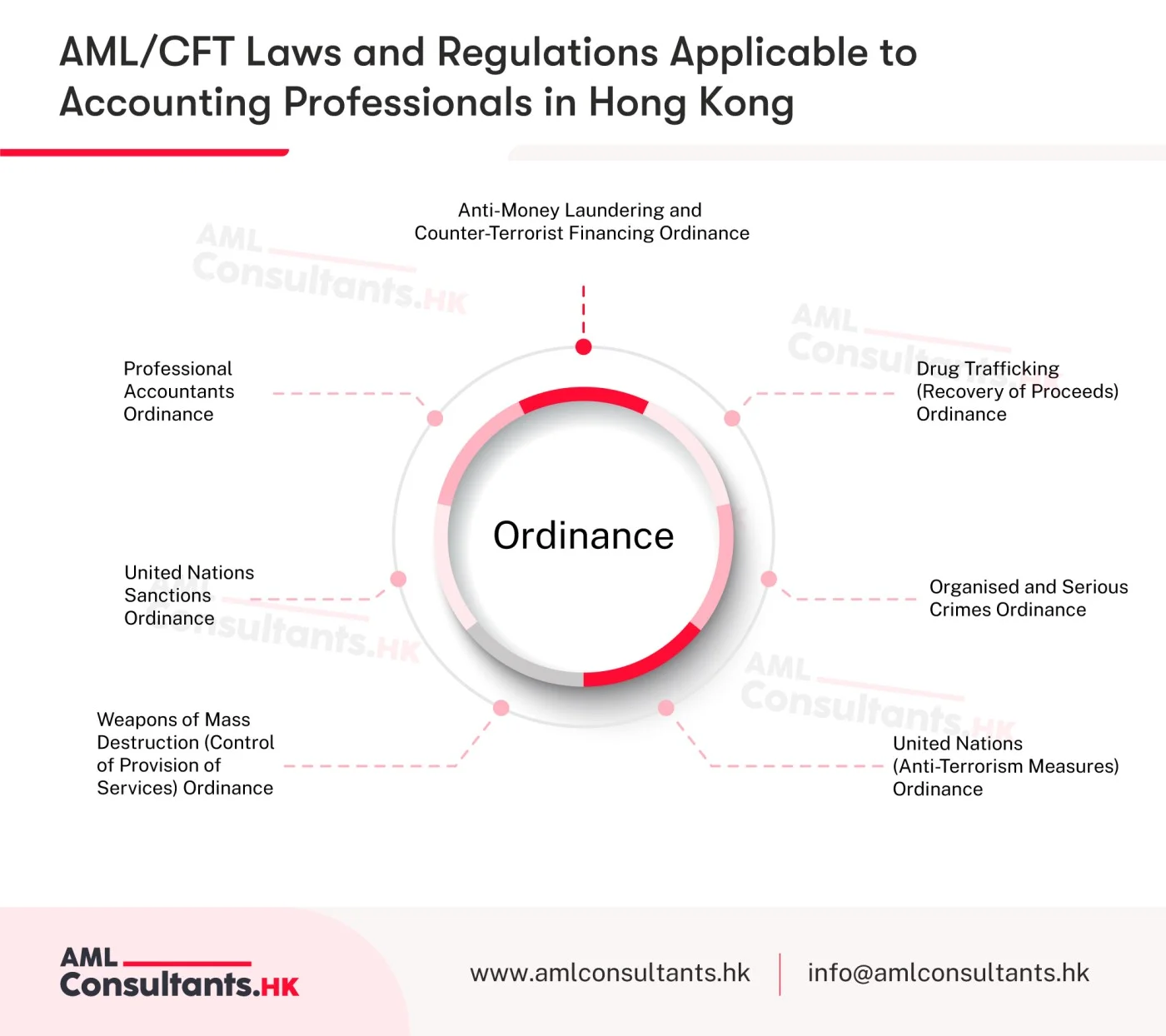
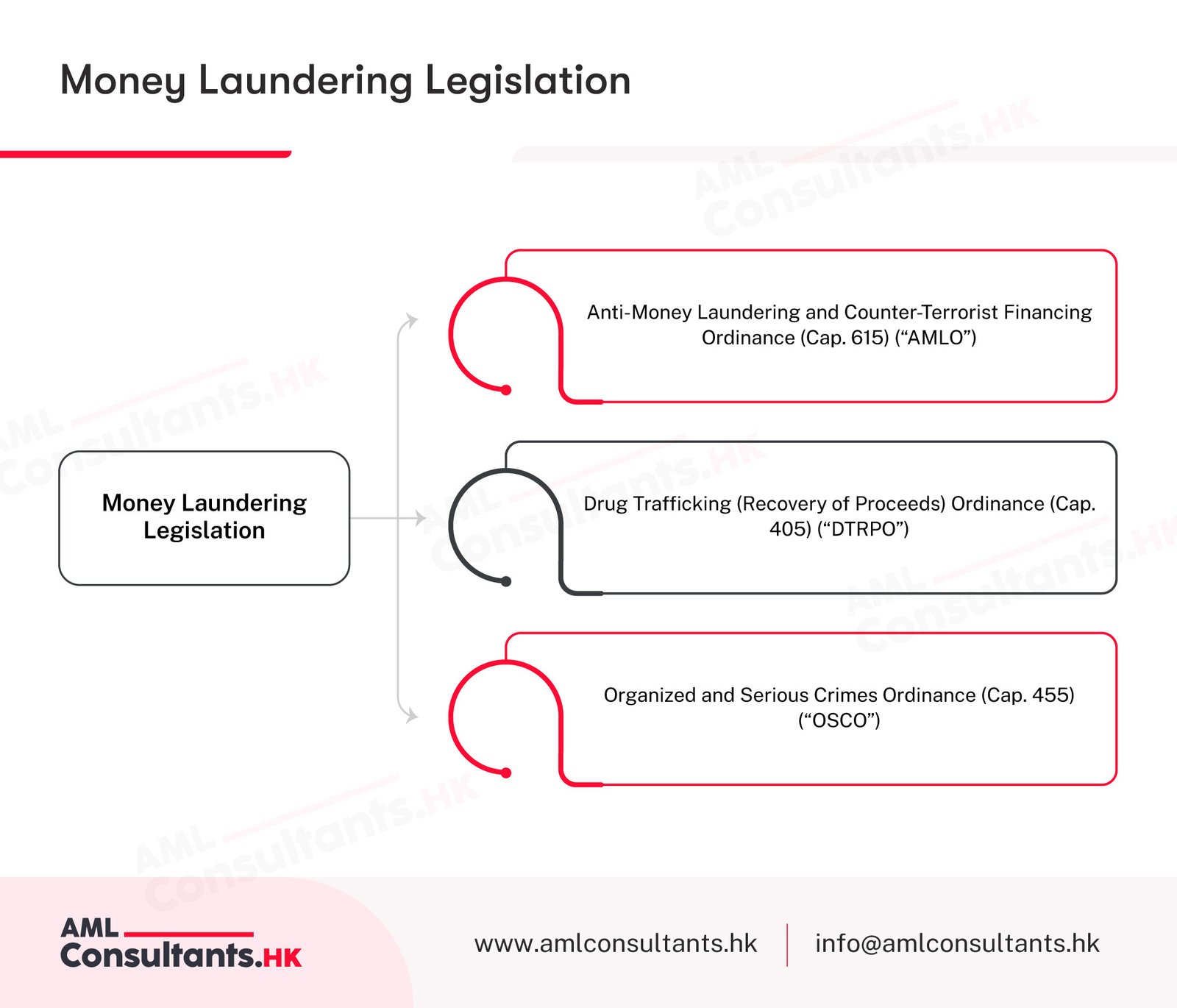
2. The core ordinances include AMLO, DTROP, OSCO, UNATMO, WMDO, and UNSO.
3. The Hong Kong supervisory authorities include HKMA, SFC, IA, Law Society of Hong Kong, HKICPA, Estate Agents’ Authority, C&ED, and Companies Registry.
4. The key law enforcement agencies include HKPF, C&ED, and ICAC.
5. JFIU is the Financial Intelligence Unit of Hong Kong.
Talk to a Hong Kong AML specialist
Hong Kong AML/CFT Regime Overview
Hong Kong’s AML/CFT regime is a comprehensive framework which is designed to combat money laundering and terrorist financing. It is mainly governed by the Cap. 615 Anti-Money Laundering and Counter-Terrorist Financing Ordinance (AMLO) and also aligned with international standards set by FATF, which requires financial institutions and designated non-financial businesses to implement a risk-based approach, customer due diligence, record-keeping, and STR reporting as part of AML compliance in Hong Kong.
Core AML/CFT Ordinances and What They Do
The core AML/CFT ordinances and their working under the AML/CFT legal framework in Hong Kong include:
AML/CFT Ordinance in Hong Kong:
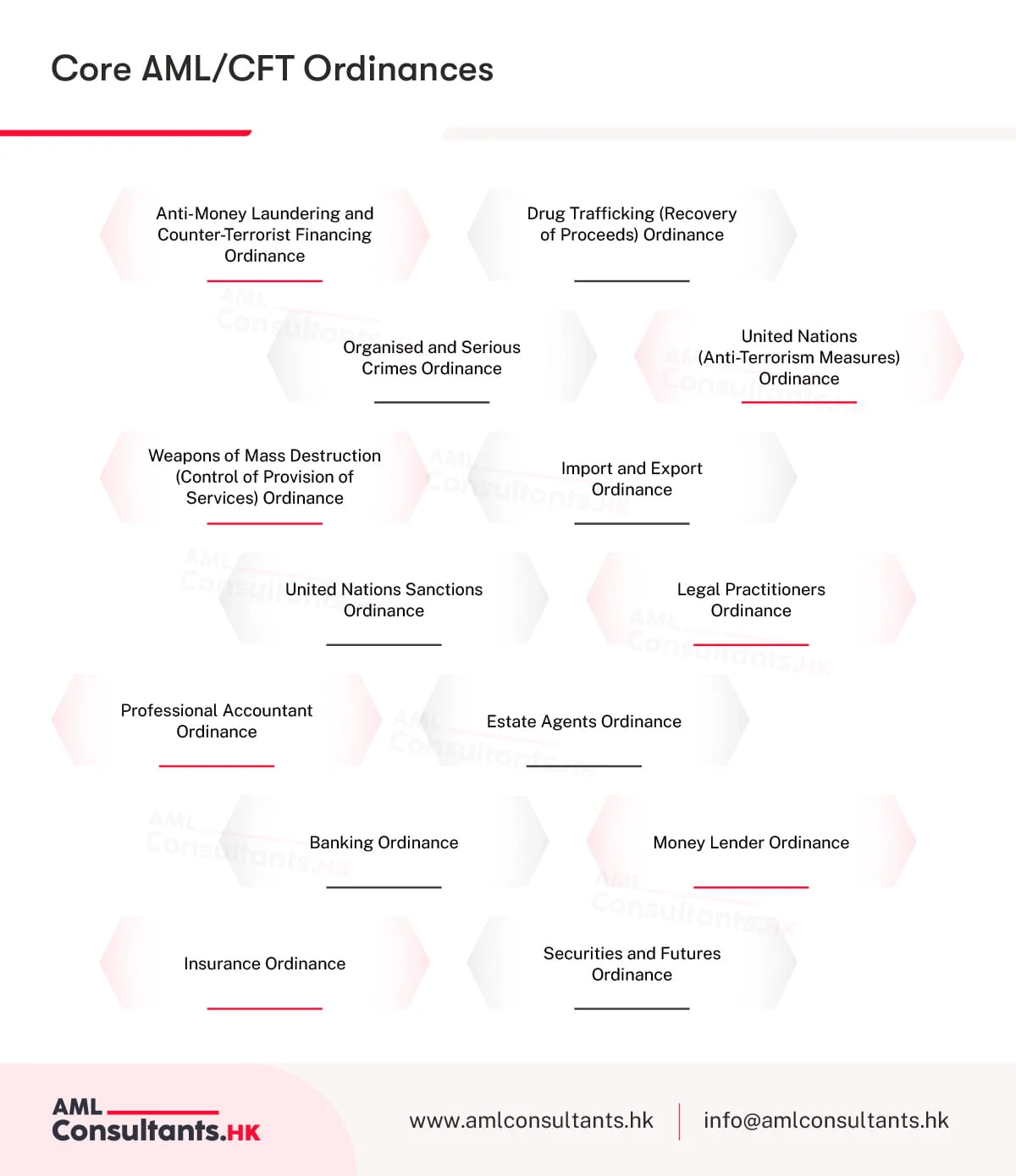
Anti-Money Laundering and Counter-Terrorist Financing Ordinance (AMLO), Cap. 615
AMLO is the main legislation governing AML Hong Kong and provides the requirements to conduct customer due diligence and maintain records for specific financial institutions and designated non-financial businesses and professionals (DNFBPs). zThis ordinance also regulates licensing and registration for money service operators, TCSPs, VASPs, and DPMS, forming a core AMLO overview within Hong Kong AML laws.
Drug Trafficking (Recovery of Proceeds) Ordinance (DTROP), Cap. 405
DTROP provides legal authority to trace, freeze, confiscate, and recover the proceeds from drug trafficking and creates offences for those dealing with such property and mandates the disclosure of suspicious transactions
Organised and Serious Crimes Ordinance (OSCO), Cap. 455
OSCO targets money laundering arising from organised and serious crimes and allows asset restraint and confiscation linked to proceeds of crime. It also makes it a crime to launder illegal funds or to fail to disclose suspicious transactions under STR reporting Hong Kong.
United Nations (Anti-Terrorism Measures) Ordinance (UNATMO), Cap. 575
The UNATMO was made to follow United Nations rules to prevent and stop terrorism. The law makes it illegal to provide support in the form of money or property and allows authorities to freeze the terrorist assets in line with sanctions obligations Hong Kong. The UNATMO enacted on 21 March 2018, further criminalises dealing with terrorist property and funding travel or training for terrorist acts.
Weapons of Mass Destruction (Control of Provision of Services) Ordinance (WMDO), Cap. 526
WMDO prohibits the services that may assist the development, production, or acquisition of weapons capable of causing mass destruction. The ordinance aims to prevent unauthorised use and development of such weapons.
Import and Export Ordinance (IEO), Cap. 60
IEO controls what goods can be imported, exported, and transited, and lists strategic commodities as one of the few categories of goods the import or export of which is prohibited and only allowed when licensed by the Director-General of Trade and Industry.
United Nations Sanctions Ordinance (UNSO), Cap. 537
UNSO is a law that allows Hong Kong to implement sanctions imposed by the United Nations Security Council on individuals and entities that are involved in activities that include international peace and security, supporting sanctions obligations Hong Kong, under the AML/CFT legal framework in Hong Kong.
Legal Practitioners Ordinance, Cap. 159
LPO is the main law in Hong Kong that regulates legal professionals and sets out the qualifications, admission, and registration requirements for barristers and solicitors, who are classified as DNFBPs under AML Hong Kong regulations.
Professional Accountant Ordinance, Cap. 50
The PAO sets the requirements and regulates professional accountants in Hong Kong, outlines qualifications, professional conduct, roles and responsibilities that are expected by accountants in Hong Kong to maintain trust and integrity in the profession.
Estate Agents Ordinance, Cap. 511
The Estate Agents Ordinance provides a regulatory framework for estate agents’ professions in Hong Kong. It sets licensing requirements, regulates practice, and provides compliance oversight and enforcement.
Banking Ordinance, Cap. 155
The banking ordinance establishes an AML/CFT legal framework in Hong Kong for banks and deposit-taking institutions to ensure the safety, stability, and integrity of the banking system.
Money Lender Ordinance, Cap. 163
The MLO provides the legal framework for money lenders in Hong Kong; it sets out licensing requirements and protects borrowers from excessive interest rates and unfair means of practices while supporting money laundering laws in Hong Kong.
Insurance Ordinance, Cap. 41
The IO regulates the insurance sector in Hong Kong and establishes the requirement for authorisation, licensing, and compliance of insurers to ensure financial stability and protect policyholders.
Securities and Futures Ordinance, Cap. 571
The SFO is the key piece of legislation which regulates the securities and futures markets in Hong Kong to protect investors and maintain trust in Hong Kong’s financial system.
Explore Hong Kong’s AML/CFT Regulatory Framework
Understand Core AML Ordinance and AML/CFT legal framework in Hong Kong
AML/CFT Supervisory Authorities in Hong Kong
Supervisory authorities play a critical role in the implementation of the AML/CFT legal framework in Hong Kong. The core AML/CFT supervisory authorities in Hong Kong include key Hong Kong AML regulators responsible for overseeing AML compliance in Hong Kong:
AML/CFT Oversight Authorities in Hong Kong
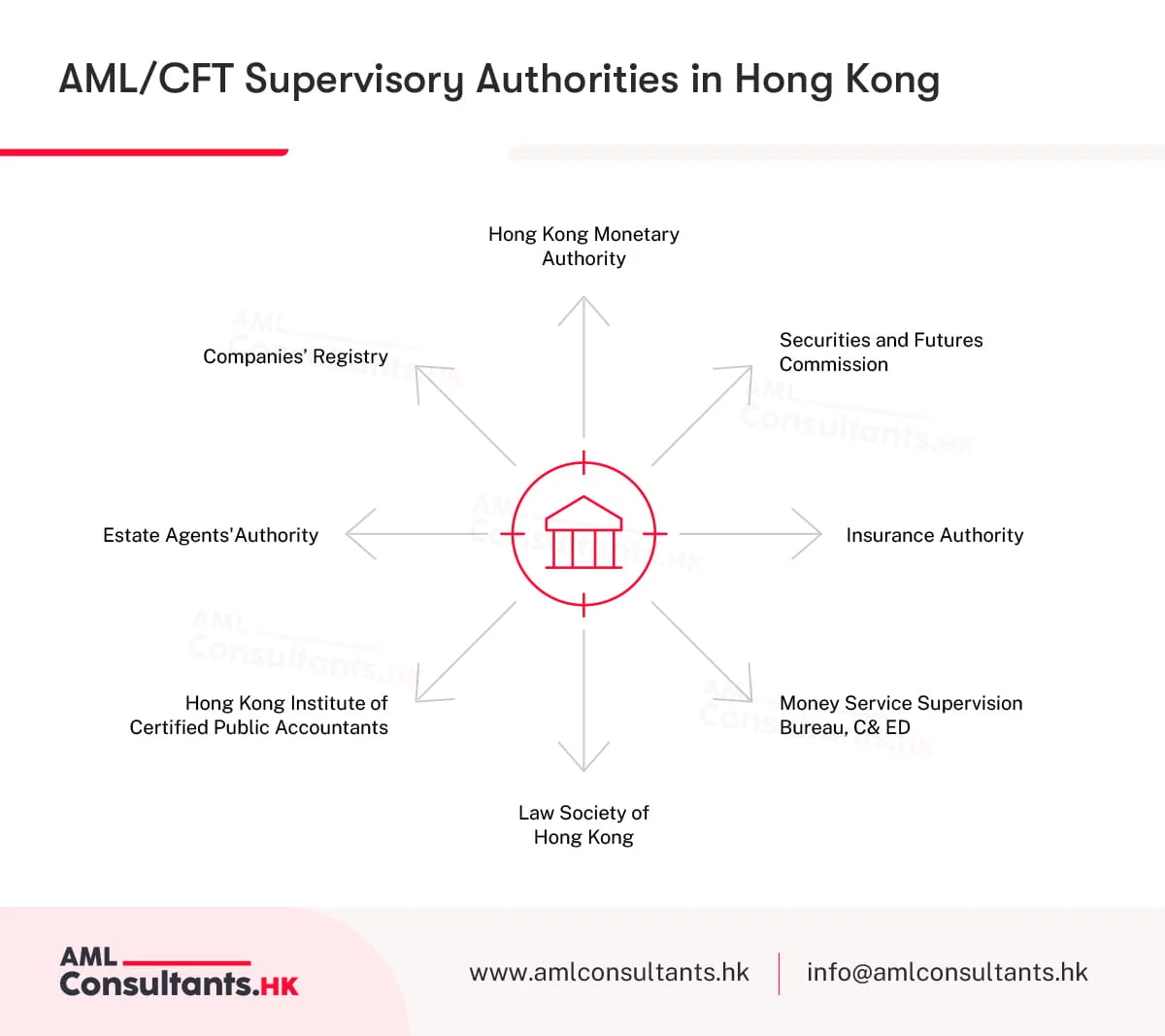
- Hong Kong Monetary Authority (HKMA)
- Securities and Futures Commission (SFC)
- Insurance Authority
- Money Service Supervision Bureau, C& ED
- Law Society of Hong Kong
- Hong Kong Institute of Certified Public Accountants
- Estate Agents’ Authority
- Companies’ Registry
AML/CFT Law Enforcement Agencies and FIU overview
AML/CFT law enforcement agencies and financial intelligence units under AML/CFT legal framework in Hong Kong include:
AML/CFT Oversight in Hong Kong
Learn how supervisory authorities, law enforcement agencies, and the financial intelligence unit work together to monitor compliance and combat ML/TF risks.
AML/CFT Regulated Entities in Hong Kong
The AML/CFT legal framework in Hong Kong provides for the regulation of the following types of entities:
1. Financial Institutions (FI)
- Banking
- Securities
- Authorised insurers and brokers
- Money services operators
- Money lenders
- Stored value facilities (SVF) Licensees
- Virtual Assets and Service Providers (VASPs)
2. Designated Non-Financial Businesses and Professions (DNFBPs)
- Legal professionals
- Accounting professionals
- Trust or company service providers (TCSPs)
- Estate agents
- Dealers in precious metals and stones (DPMS)
Hong Kong AML/CFT NRA Implications
Hong Kong AML/CFT NRA implications enable a strengthening risk-based approach, enhancing the AML/CFT legal framework in Hong Kong, monitoring new and emerging risks, and strengthening STR reporting in Hong Kong, which helps in effective resource allocation to combat ML/TF risks.
How to Use This Guide
1) Explore which regulator oversees each sector and the legal and compliance frameworks that apply:
| Supervisory Authority | Supervises | Legal Framework | Compliance Requirements |
|---|---|---|---|
| Hong Kong Monetary Authority (HKMA) | Banks | AML/CFT Legal Framework for Banks in Hong Kong | AML/CFT Compliance Requirements for Banks in Hong Kong |
| Stored Value Facilities | AML/CFT Legal Framework for Stored Value Facilities in Hong Kong | AML/CFT Compliance Requirements for Stored Value Facilities Licensees in Hong Kong | |
| Securities and Futures Commission (SFC) | Securities Sector | AML/CFT Legal Framework for Securities Sector in Hong Kong | AML/CFT Compliance Requirements for Securities Sector in Hong Kong |
| VASPs | AML/CFT Legal Framework for VASPs in Hong Kong | AML/CFT Compliance Requirements for VASPs in Hong Kong | |
| Insurance Authority | Insurers and Brokers | AML/CFT Legal Framework for Insurers and Brokers in Hong Kong | AML/CFT Compliance Requirements for Insurers and Brokers in Hong Kong |
| Money Service Supervision Bureau, C&ED | Money Service Operators | AML/CFT Legal Framework for Money Service Operators in Hong Kong | AML/CFT Compliance Requirements for Money Service Operators in Hong Kong |
| DPMS | AML/CFT Legal Framework for DPMS Sector in Hong Kong | AML/CFT Compliance Requirements for the DPMS Sector in Hong Kong | |
| Law Society of Hong Kong | Legal Professionals | AML/CFT Legal Framework for Legal Professionals in Hong Kong | AML/CFT Compliance Requirements for Legal Professionals in Hong Kong |
| Hong Kong Institute of Certified Public Accountants | Accounting Professionals | AML/CFT Legal Framework for Accounting Professionals in Hong Kong | AML/CFT Compliance Requirements for Accounting Professionals in Hong Kong |
| Estate Agents' Authority | Estate Agents | AML/CFT Legal Framework for Estate Agents in Hong Kong | AML/CFT Compliance Requirements for Estate Agents in Hong Kong |
| Companies’ Registry | Trust and Company Service Providers (TCSPs) | AML/CFT Legal Framework for TCSPs in Hong Kong | AML/CFT Compliance Requirements for TCSPs in Hong Kong |
2) Understand how regulated entities are classified, the AML/CFT legal framework in Hong Kong, and the compliance requirements that apply to each group:
| Regulated Entities | Classified As | Legal Framework | Compliance Requirement |
|---|---|---|---|
| Banks, Securities Sector, Insurers and Brokers, Money Service Operators, Stored Value Facilities Licensees, And VASPs. | Financial Institutions | AML/CFT Legal Framework for Financial Institutions in Hong Kong | AML/CFT Compliance Requirements for Financial Institutions in Hong Kong |
| Legal Professionals, Accounting Professionals, TCSPS, Estate Agents, And DPMS. | Designated Non-Financial Businesses and Professions (DNFBPs) | AML/CFT Legal Framework for DNFBPs in Hong Kong | AML/CFT Compliance Requirements for DNFBPs in Hong Kong |
Find The AML/CFT Rules That Apply to You
Know Sector-Specific AML/CFT Legal Frameworks in Hong Kong and Compliance Requirements.
How AML Consultants HK Helps Implement AML/CFT Legal Framework in Hong Kong
AML Consultants HK helps in implementing the AML/CFT legal framework in Hong Kong through its Enterprise-Wide Risk Assessment to identify, evaluate, and mitigate the ML/TF risks. It helps in drafting policies and procedures that ensure regulated entities follow AML laws and regulations. AML Consultants HK provides AML/CFT training to staff, equipping them with the knowledge and skills to comply with AML regulations.
It also provides managed KYC to ensure ongoing compliance with AML/CFT regulations, enabling software selection and advising regulated entities to choose the best software solution suitable for them.
AML Consultants HK also helps with an independent AML health check to identify gaps or weaknesses and recommend required improvements.
The services help financial institutions and DNFBPs to effectively manage ML/TF risks under the legal framework in Hong Kong.
FAQs: AML/CFT Legal Framework in Hong Kong
What is the AML legislation in Hong Kong?
The AML legislation in Hong Kong is governed by the Anti-Money Laundering and Counter-Terrorist Financing Ordinance (AMLO) and sets requirements for customer due diligence and record-keeping for specified financial institutions.
Which laws regulate anti-money laundering and counter-terrorist financing in Hong Kong?
The main laws that regulate anti-money laundering and counter terrorist financing in Hong Kong include the Anti-Money Laundering and Counter-Terrorist Financing Ordinance, Drug Trafficking (Recovery of Proceeds) Ordinance, Organised and Serious Crimes Ordinance, United Nations (Anti-Terrorism Measures) Ordinance, and United Nations Sanctions Ordinance.
What penalties apply for AML non-compliance in Hong Kong?
The common penalties for AML non-compliance in Hong Kong include financial penalties, imprisonment, reputational damage, and license revocation.
How does Hong Kong’s AML framework align with FATF recommendations?
AML/CFT legal framework in Hong Kong aligns with FATF recommendations by implementing a risk-based approach, customer due diligence, and suspicious transactions reporting.
About the Author

Pathik Shah
Founder | FCA, CAMS, CISA, CS, DISA (ICIAI), FAFP (ICAI)
Pathik Shah is a Chartered Accountant with more than 28 years of experience working at the juncture of governance, compliance, and financial risk. His work has consistently focused on helping institutions in Hong Kong to operate confidently within regulated environments, particularly where AML/CFT obligations demand practical implementation.
As part of his role with AML Consultants HK, Pathik is involved in working with various financial institutions and DNFBPs so that not only are their AML frameworks compliant from a regulatory standpoint under the Anti-Money Laundering and Counter-Terrorist Financing Ordinance (Cap. 615), but they are also effective from a supervisory review expectations standpoint. Aside from that, Pathik has served as a functional expert in the development and deployment of RegTech solutions to enhance monitoring discipline and documentation integrity. Additionally, he has assisted institutions in understanding the FATF requirements and how to implement them within the Hong Kong context in an operationally feasible manner.
Pathik is a recognised thought leader in AML/CFT and frequently shares insights on trends in financial crime risks and developing supervisory approaches on various platforms.